
What it is
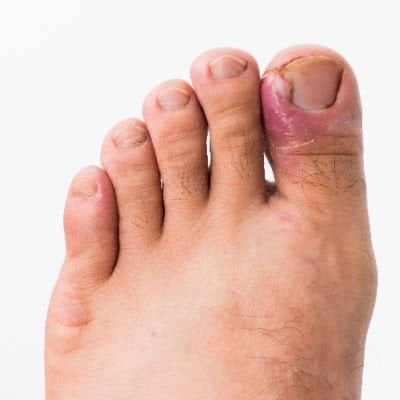
An ingrown toenail occurs when the nail edge grows into the surrounding skin, producing pain, redness and often infection. Improper trimming, tight shoes, trauma and inherited nail shape are the usual causes.
Home surgery — digging at the corner with clippers — is the reliable way to turn a minor ingrown nail into a serious infection. In-office treatment takes a few minutes under local anaesthetic and, for recurrent cases, can be made permanent.
Symptoms we look for
- Pain and tenderness along the nail edge
- Redness, warmth or swelling of the nail fold
- Drainage or a small amount of pus
- Repeated recurrence in the same nail
How we treat it
- In-office removal of the offending nail border under local anaesthetic
- Antibiotics when infection is established
- Permanent matrixectomy for recurrent ingrown nails
- Correction of trimming technique and footwear
- Treatment of underlying nail deformity
When to see a podiatrist
Come in as soon as the nail fold is red or draining — and immediately if you are diabetic or have circulation problems, where a nail infection carries real risk.
Common questions
Does the procedure hurt?
The local anaesthetic injection is the only uncomfortable part, and it takes seconds. The procedure itself is painless and you walk out.
Will the nail grow back?
After a standard removal, yes. If you choose the permanent option, that border is treated so it does not return.