
What it is
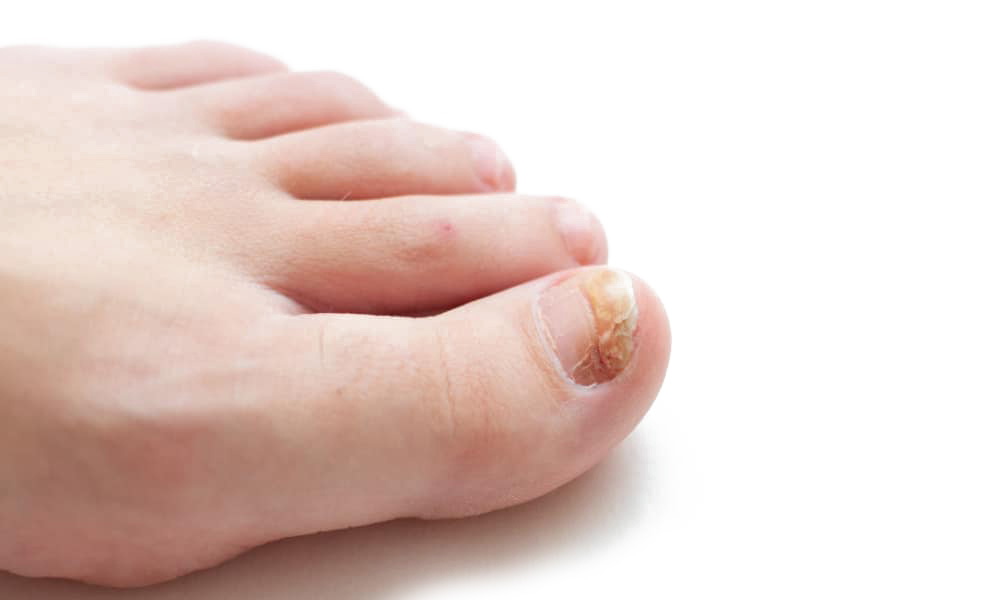
Onychomycosis infects the nail bed beneath the plate, which is why topical treatments applied to the surface so often fail — the medication simply cannot reach the organism. The nail thickens, yellows, becomes brittle and may separate from the bed.
Effective treatment starts with confirming that it is actually fungus. A meaningful proportion of thickened, discoloured nails are caused by trauma, psoriasis or other conditions that will not respond to antifungals at all.
Symptoms we look for
- Thickened, yellow or brown discoloration
- Crumbling or brittle nail edges
- Nail lifting away from the nail bed
- Odour, or discomfort in shoes
How we treat it
- Nail sampling to confirm the diagnosis
- Professional debridement to reduce nail thickness
- Prescription topical antifungals that penetrate the plate
- Oral antifungal therapy with monitoring where appropriate
- Permanent nail procedures for severe, painful cases
When to see a podiatrist
Come in if a nail is thickening, discolouring or lifting — and especially if you are diabetic, where a fungal nail can become an entry point for more serious infection.
Common questions
Why did the drugstore treatment not work?
Most over-the-counter products cannot penetrate the nail plate to reach the infection in the nail bed beneath it.
How long does treatment take?
A toenail grows out over roughly nine to twelve months, so clearance is measured in seasons, not weeks. Improvement is visible well before that.