
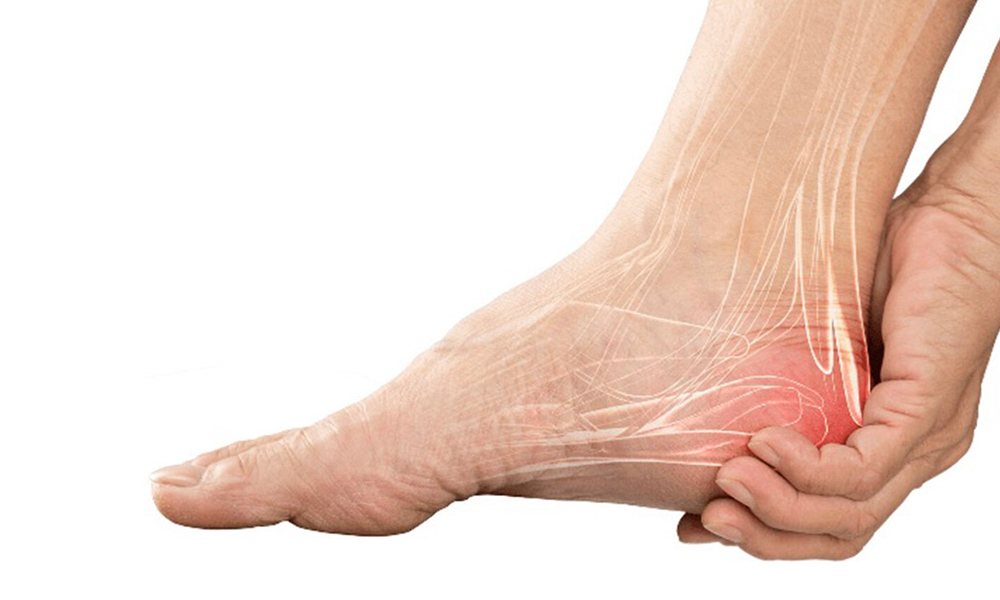
What it is
Heel pain usually originates in the plantar fascia — the thick band of tissue running from the heel bone to the toes. Repeated micro-tearing where that band anchors into the heel produces inflammation, and over time a bone spur may form in response.
Because the fascia tightens overnight, the classic presentation is severe pain on the first few steps out of bed that eases as you walk, then returns after periods of sitting. Left untreated it changes how you walk, which can create knee, hip and back problems downstream.
Symptoms we look for
- Sharp, stabbing pain with your first steps in the morning
- Pain that returns after sitting or driving
- Tenderness at the inside front of the heel
- Aching that worsens through a long day on your feet
How we treat it
- Custom orthotics to offload and support the arch
- Targeted stretching and physical therapy protocols
- Corticosteroid injection for stubborn inflammation
- Extracorporeal shockwave therapy for chronic cases
- Surgical release when 6+ months of conservative care fails
When to see a podiatrist
If heel pain has lasted more than two weeks, wakes you at night, or is changing the way you walk, get it evaluated. Chronic plantar fasciitis is far harder to reverse at month twelve than at month one.
Common questions
Do I need surgery for heel pain?
Almost never. More than nine in ten patients resolve with orthotics, stretching, injection or shockwave therapy. Surgery is reserved for cases that fail six months or more of well-executed conservative care.
Are over-the-counter inserts good enough?
They help some people with mild symptoms. Custom orthotics are made from a cast of your foot and correct the specific mechanics driving your pain, which off-the-shelf inserts cannot do.
How long does recovery take?
With consistent treatment most patients feel meaningful improvement in four to eight weeks. Chronic cases of a year or more take longer.