
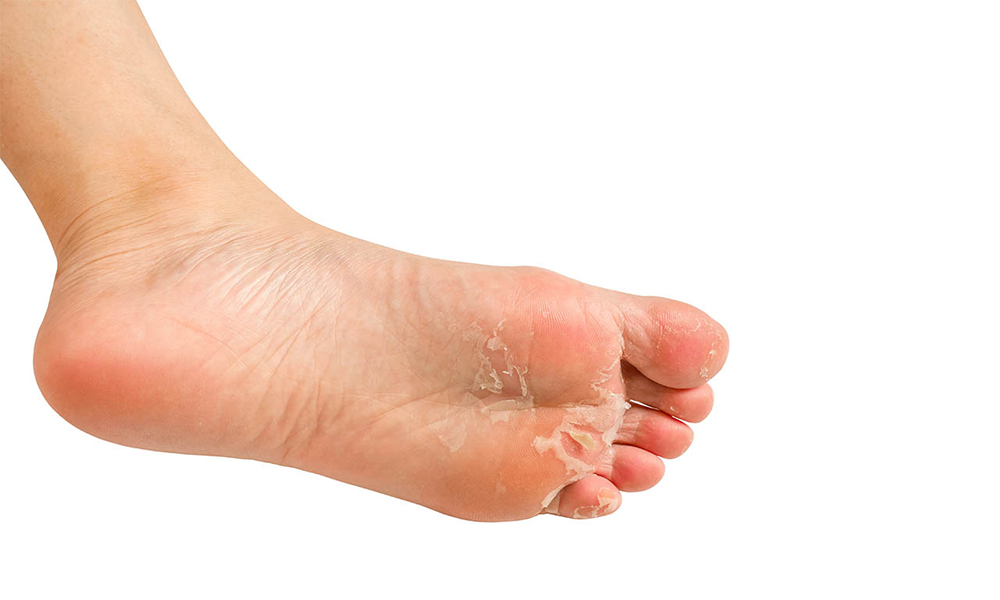
What it is
The fungus thrives in warm, moist conditions, which is why it favours the spaces between the toes and why it recurs so readily in people who train daily or work in boots.
Untreated, it can spread to the toenails, where it becomes considerably harder to eradicate, and cracks in the skin can serve as an entry point for bacterial infection — a genuine concern in diabetic patients.
Symptoms we look for
- Itching, stinging or burning between the toes
- Scaling, peeling or cracked skin
- Dry, flaking skin on the soles
- Blisters in acute flare-ups
How we treat it
- Confirmation of diagnosis — not all scaling is fungal
- Prescription topical antifungal therapy
- Oral antifungals for widespread or resistant infection
- Footwear and sock decontamination guidance
- Moisture management to prevent recurrence
When to see a podiatrist
Come in if over-the-counter treatment has not worked within two weeks, if the skin is cracked or weeping, or if you are diabetic.
Common questions
Is it contagious?
Yes, both to other people and to other parts of your own body. Do not share towels, and treat your shoes as well as your feet.
Why does it keep coming back?
Usually because the shoes are re-infecting the feet, or because moisture control has not changed. Both are addressable.